
CHAS is very grateful to Canterbury Christ Church University student, Cai Williams, for selecting and researching information on 9 postcards from the Derek Butler collection, and for the text below.
After the RAF conducted a bombing raid at Lübeck on the 28-29 of March 1942, an incensed Hitler, who felt that the strikes were a humiliation, conducted retaliatory strikes against Great Britain.[1] The ultimate aim of these retaliatory strikes, known today as the ‘Baedeker Blitz’, was to target the most beautiful cities in England.[2] The postcards depicted on this page show some of the buildings that were destroyed in the air raids on Canterbury.
Rose Hotel
15 Parade (16 St. George’s Street)
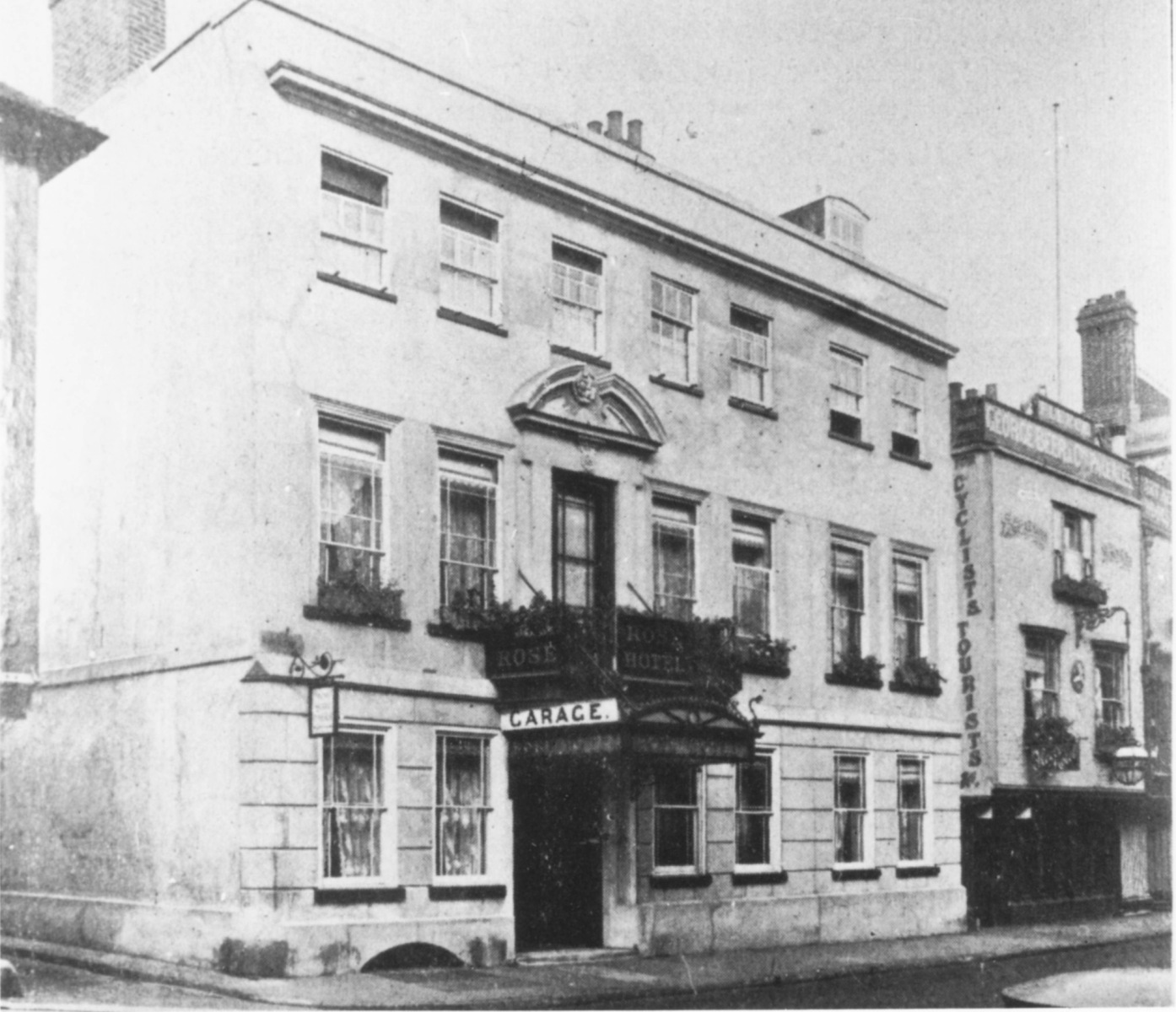
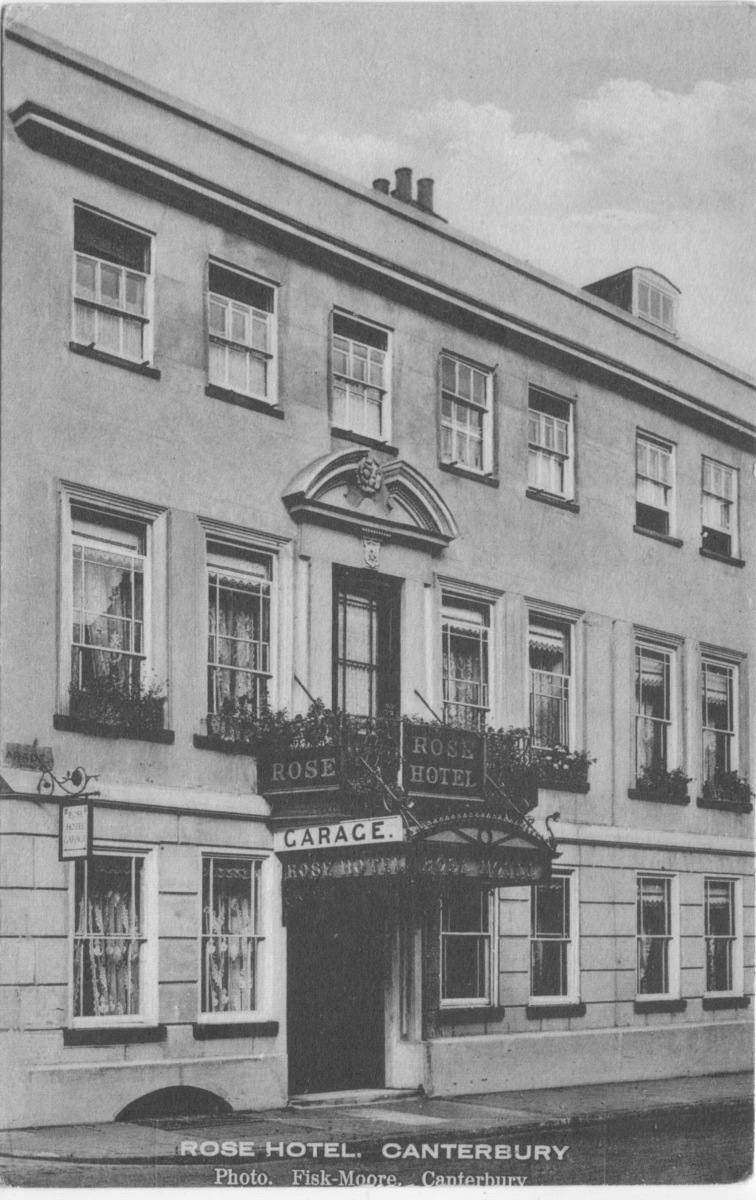
The first two postcards show The Rose Hotel, a Canterbury hotel that hid its old age with a Regency era façade. (See Images 1 & 2) This building had an uncertain history. Before it was destroyed, this hotel was believed to have originally opened in 1660. In fact, it is speculated that Charles II may have briefly been a guest at this hotel while in Canterbury on his way to London to reclaim the English throne.[3]
The hotel had many owners throughout its existence. In 1917, the hotel was advertised as being run by Henry Ritter, Family and Commercial, Garage and Stabling.[4] However, by the late 1930s the hotel had closed with negotiations taking place to demolish the hotel for a new shopping development, which never took effect due to the Second World War. With the start of the war and the planned demolition scrapped, the hotel became a club for servicemen, known as the “Rose Club”. On the 1st of June 1942, in what is now known as the Baedeker raids, the hotel was burned down by incendiary bombs.[5]
St Mary Bredin Church, Rose Lane
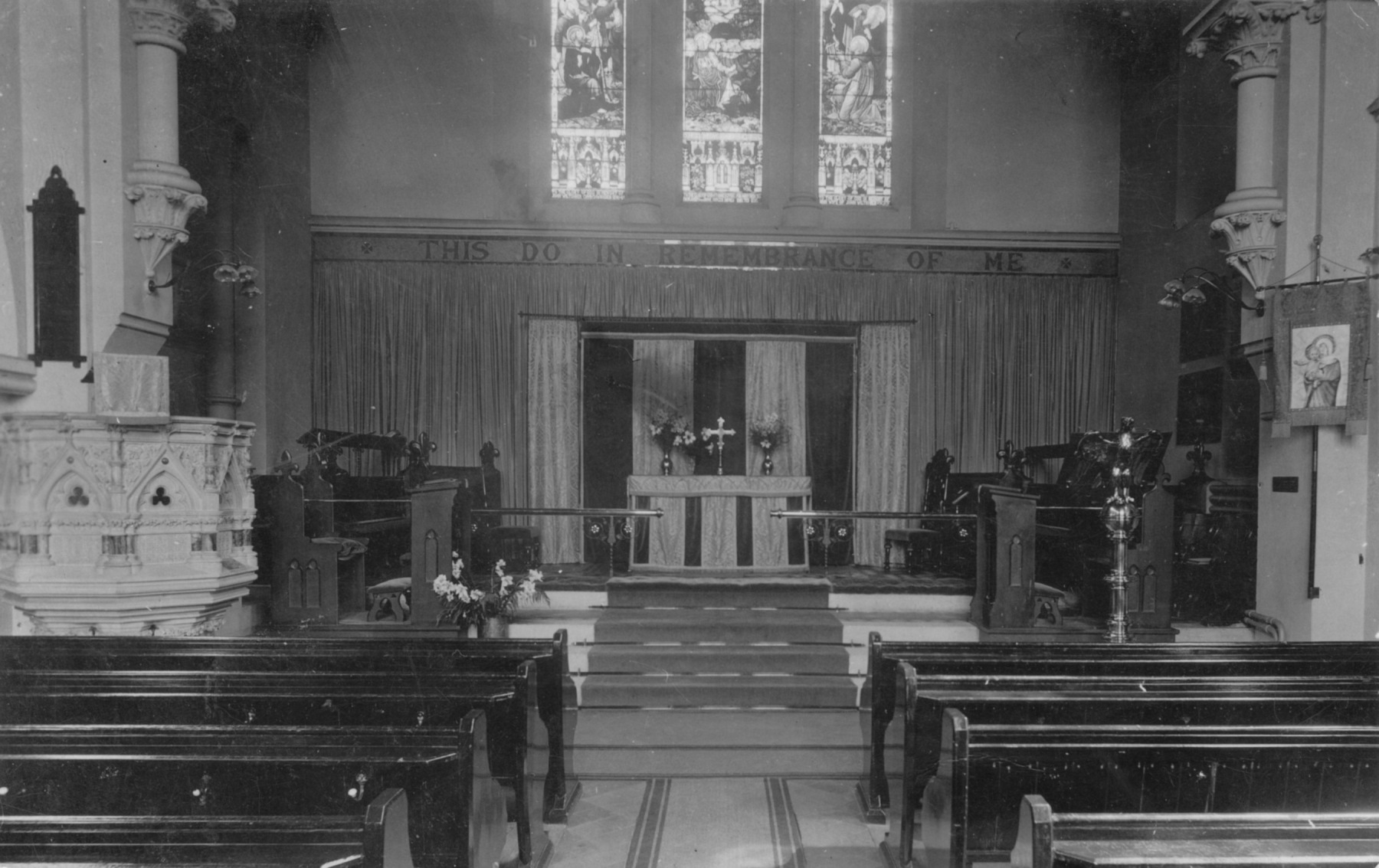
The original Church of St Mary Bredin was located in Rose Lane. Built upon its old Norman foundations, this new Victorian church was built in 1867 and could seat up to 450 people. (See Image 3 for interior) The church was known by locals as the Little Lady Church, due to its size and location, being near the Dane John mound.
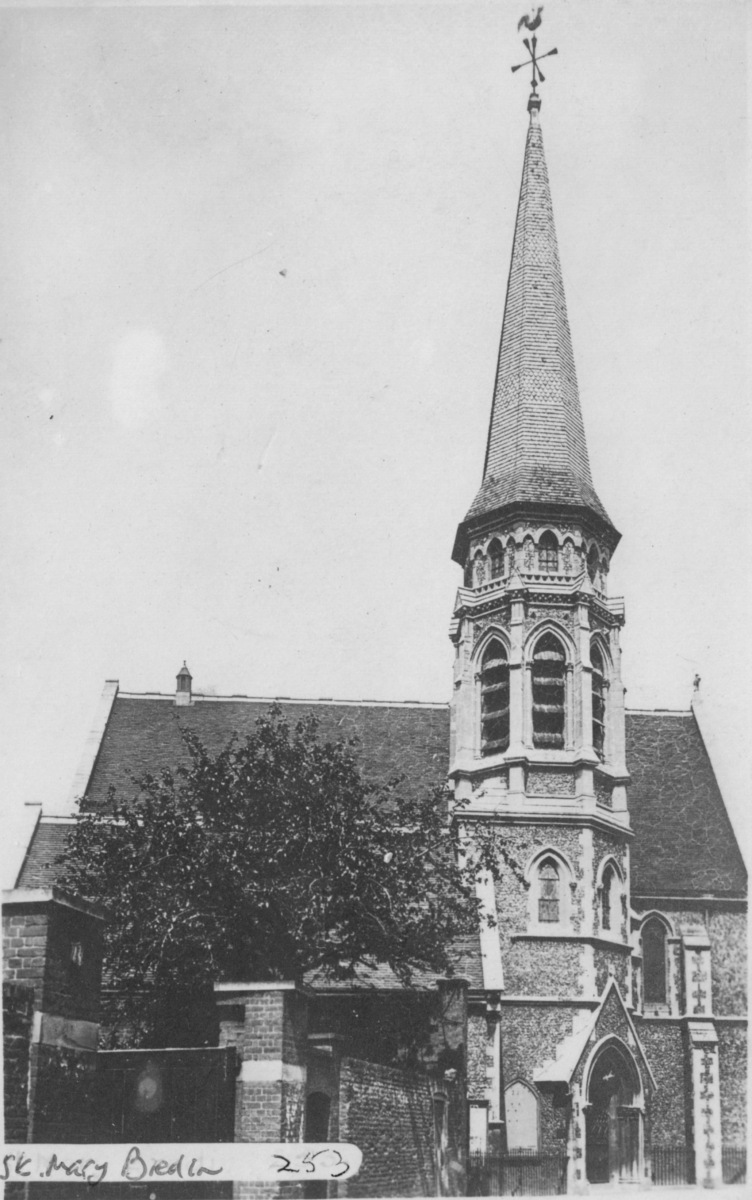
This church’s foundation has Norman origins with the first wooden iteration of St Mary Bredin being built by the descendants of Vitalis, one of Odo’s knights, who arrived in England with Willam the Conqueror.[6] A period of decline lead to the church being held in sequestration by the Lord Chancellor from the mid-18thcentury to 19th century.[7] Eventually, in the year 1867, the church was rebuilt with new Gothic architecture on Rose Lane. This new Victorian church was distinguished with a tall octagonal tower and wooden spire. (See Images 4 & 5) The tower and the rest of the church were set ablaze by incendiary bombs, during an estimated 6,000-8,000 bombs being dropped onto the city during the Baedeker Raids of 1 June 1942.[8] Following the destruction of the church, the congregation worshipped in the chapel at Nunnery Fields until a new church could be raised.[9]
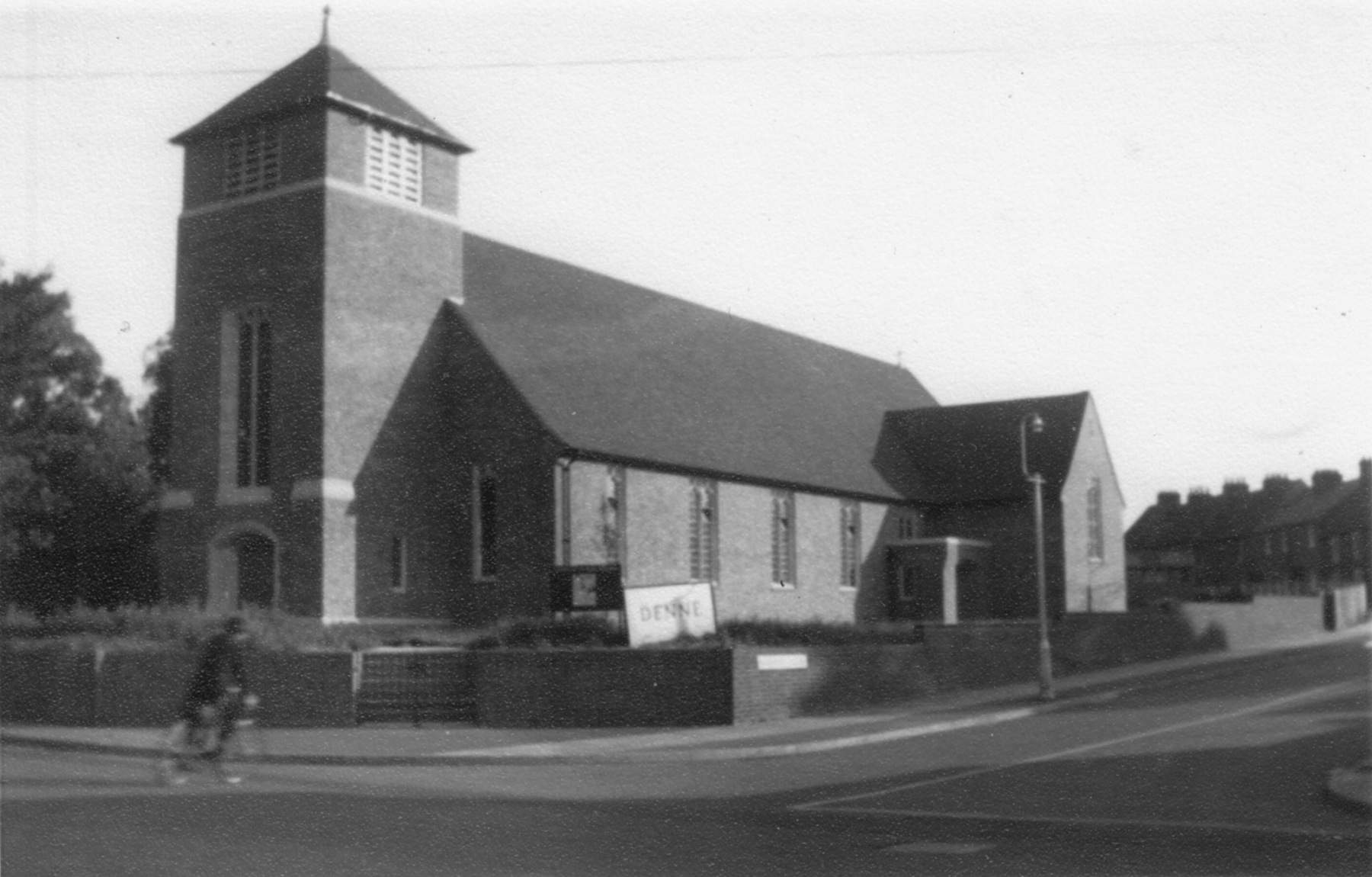
St Mary Bredin had become a burnt husk and was eventually torn down. As it was a relatively new church, it was decided that doing so would be more convenient.[10] A new church was constructed in a different location, Nunnery Fields, and is still there today. (See image 6)
The location of the original church that burned down can be identified today from the plan on a plaque on the Rose Lane wall of Primark in Whitefriars. With both Whitefriars and the Marlowe Shopping centre now standing on the site of the church and its graveyards; it had two.[11]
Congregational Church, Watling Street
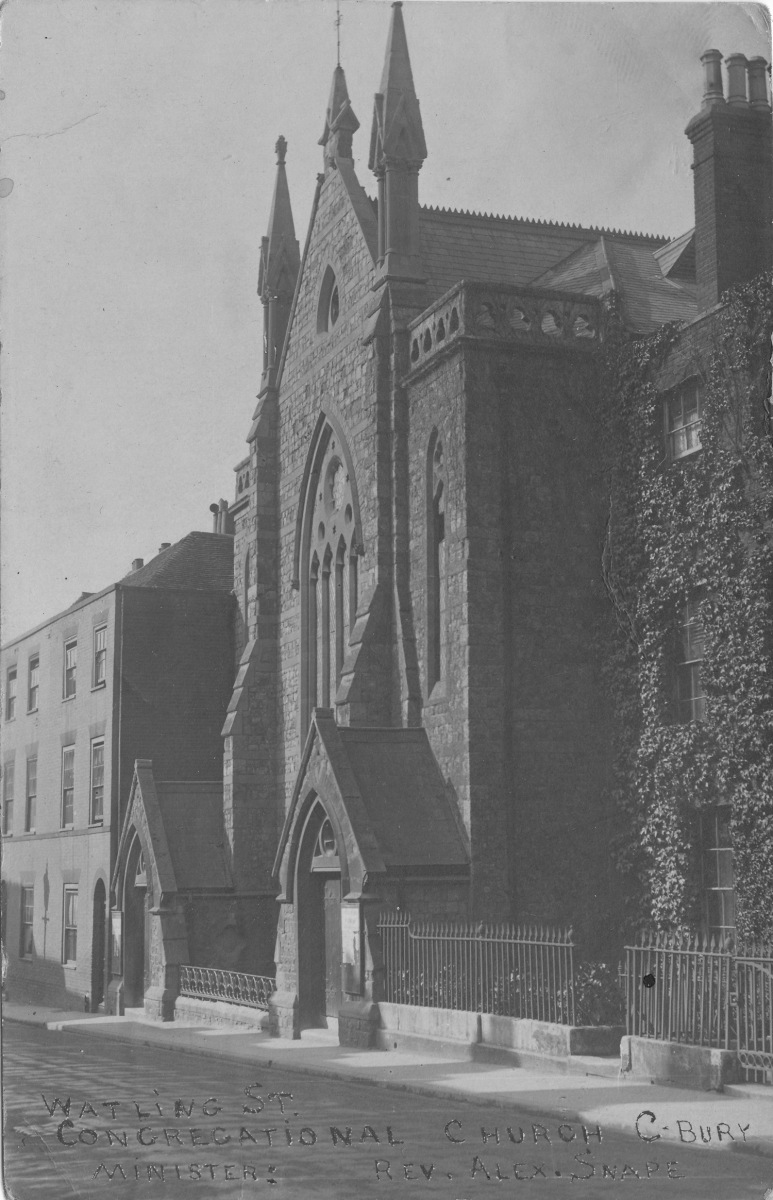
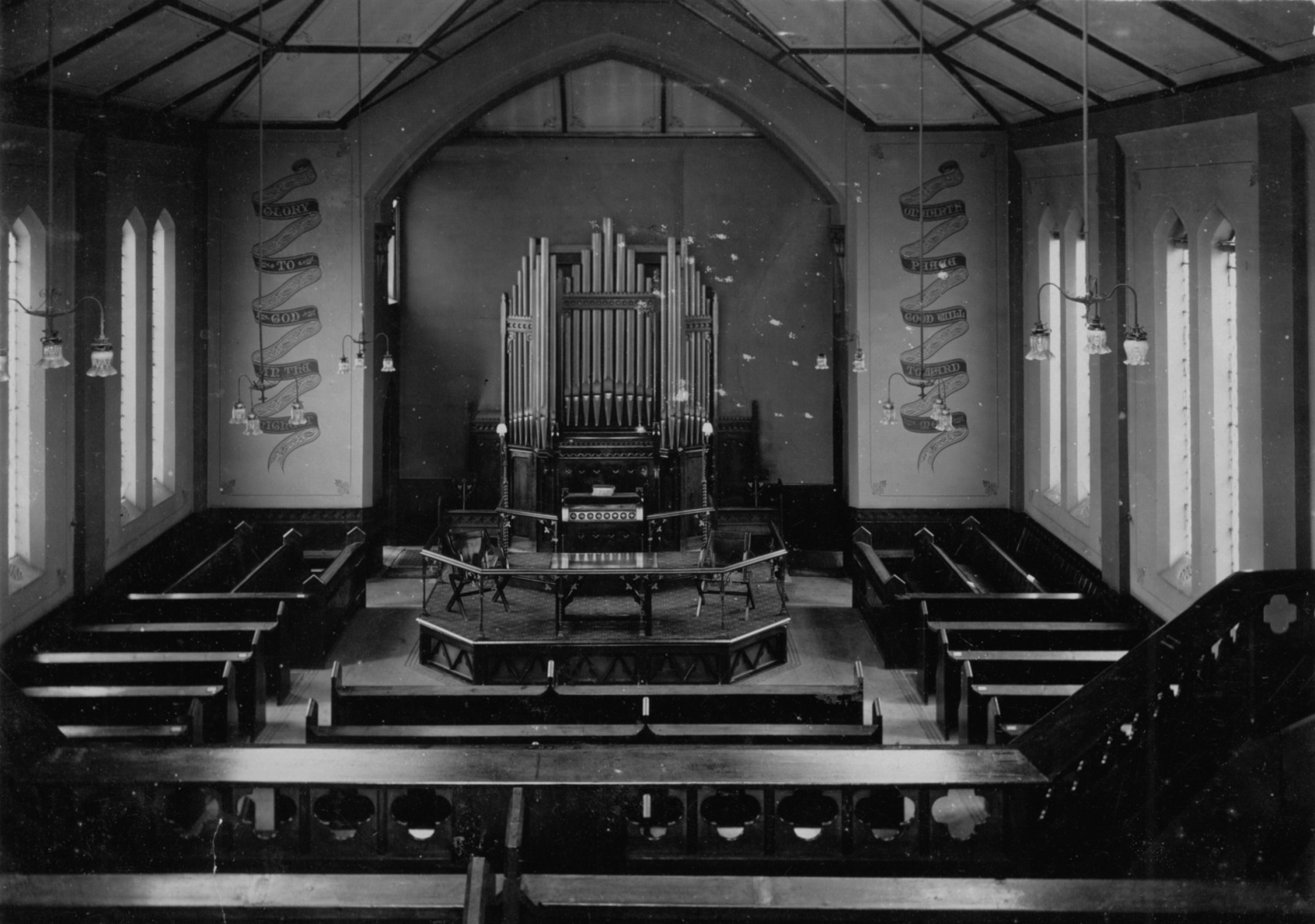
The first iteration of this church was the Countess of Huntingdon’s Connexion and it could seat 450 people inside. This church had a tall symmetrical façade of ragstone and Bath stone and was destroyed in the 1942 air raids. (See Image 7 for exterior & Image 8 for interior)
Congregationalists were among the first nonconformist Christian groups to form in Canterbury in the 1640s, during the English Civil War.[12] Designed by W. F. Poulton, the church was built in 1863. It sustained interior damage during an air raid in June 1942. There was a possibility of repair; however the damaged church was fully destroyed the same year by an explosive bomb in October. After the loss of the building, the church merged with the Guildhall street Congregationalists in 1943, while plans were being made for the reconstruction. In the interim period a temporary Congregationalist church was established on Watling Street at the site of the levelled building.[13] While this temporary church was set up, the construction of a new and permanent church began in 1954. Due to planning and payment issues, construction was delayed and only completed in October 1958; and it would eventually become the United Reformed Church. In the beginning of the 1990’s the proposed Whitefriars Redevelopment Scheme put the church in a dire position. The United Reformed Church was demolished in 2001, and a new church was erected on the opposite side of the road.[14]
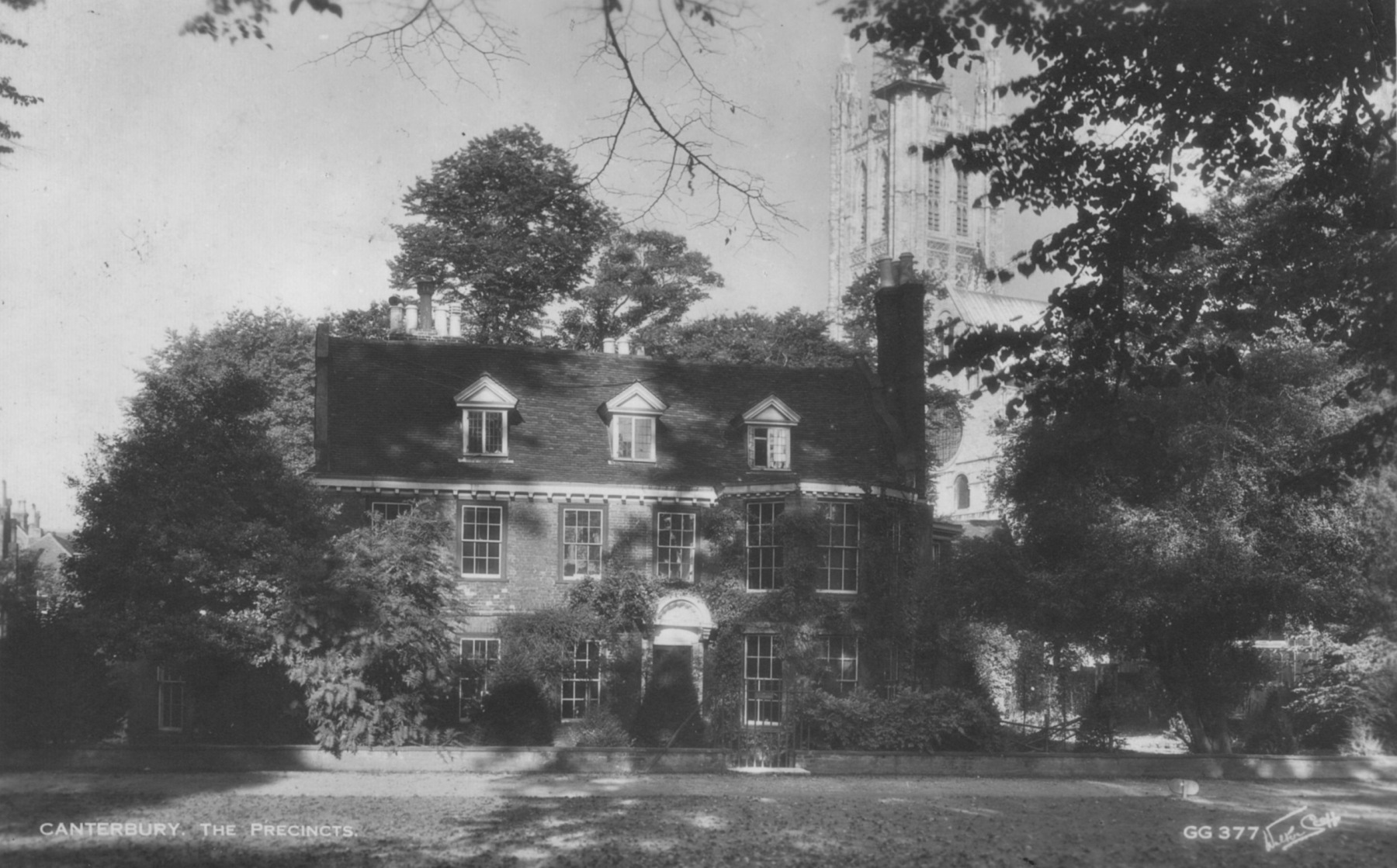
No. 14 The Precincts
One of the houses lost in the Baedeker Blitz was No.14 The Precincts. This seventeenth-century building was one of the most beautiful houses in the South Precincts. Built with the support of William Masters, this house featured a four-bay Jacobean design, including Dutch-style gables. Over the years the house underwent many extensions. (See Image 9 for exterior of house) The last resident of No.14 was Canon McNutt, who survived the destruction of the house during the Baedeker raid of 1942. Although the original had been ruined, it was quickly rebuilt and in the 1950s using a neo-Georgian design that the Dean and Chapter favoured.[15]
Click on each image below to enlarge it.
Bibliography
Baxter, Tricia, “Kent Family History Society”, accessed May 4, 2026, https://www.kfhs.org.uk/event-canterbury-report-canterbury-s-lost-churches-2022-07-08
Butler, Derek. Britain in Old Photographs. Canterbury Revisited. Sutton Publishing Ltd, 1997.
Butler, Derek, A Century of Canterbury, Swindon: Sutton Publishing, 1998.
Clapson, Mark. “Air raids in Britain, 1940-45.” In Blitz Companion: Aerial Warfare, Civilians and the City Since 1911: Aerial Warfare, Civilians and the City Since 1911, pp. 37-75. London: University of Westminster Press, 2019.
Crampton, Paul, Canterbury’s Lost Heritage, Gloucestershire: The History Press, 2006.
Gore, Jan. The Terror Raids of 1942: The Baedeker Blitz. Pen and Sword Military, 2020.
Hasted, Edward, ‘Canterbury: The churches within the city and suburbs’, in The History and Topographical Survey of the County of Kent: Volume 11, Canterbury, 1800, British History Online, accessed May 2, 2026, https://www.british-history.ac.uk/survey-kent/vol11/pp209-288.
Skelton, Paul, “Dover Kent Archives”, accessed May 1, 2026, http://www.dover-kent.com/Rose-Hotel-Canterbury.html
[1] Jan, Gore, The Terror Raids of 1942: The Baedeker Blitz. Pen and Sword Military, 2020.
[2] Mark, Clapson. “Air raids in Britain, 1940-45.” In Blitz Companion: Aerial Warfare, Civilians and the City Since 1911: Aerial Warfare, Civilians and the City Since 1911, pp. 38. London: University of Westminster Press, 2019.
[3] Skelton, Paul, “Dover Kent Archives”, accessed May 1, 2026, http://www.dover-kent.com/Rose-Hotel-Canterbury.html.
[4] Paul, Skelton, “Dover Kent Archives”, accessed May 1, 2026, http://www.dover-kent.com/Rose-Hotel-Canterbury.html
[5] Paul, Crampton, Canterbury’s Lost Heritage, (Gloucestershire: The History Press, 2006), 85.
[6] Edward, Hasted, ‘Canterbury: The churches within the city and suburbs’, in The History and Topographical Survey of the County of Kent: Volume 11(Canterbury, 1800), British History Online, accessed May 2, 2026, https://www.british-history.ac.uk/survey-kent/vol11/pp209-288.
[7] Ibid, 241
[8] Derek, Butler, A Century of Canterbury, (Swindon: Sutton Publishing, 1998), 65.
[9] Derek, Butler, Canterbury in Old Photographs, (Gloucestershire: Budding Books, 1998), 149.
[10] Paul, Crampton, Canterbury’s Lost Heritage, (Gloucestershire: The History Press, 2006), 108.
[11] “Kent Family History Society”, Tricia Baxter, accessed May 4, 2026
[12] Marjorie, Lyle, Canterbury: History You Can See, (Gloucestershire: The History Press, 2008), 82.
[13] Paul, Crampton, Canterbury’s Lost Heritage, (Gloucestershire: The History Press, 2006), 116.
[14] Ibid, 117.
[15] Ibid, 64.